Introduction: The Critical Need for Trust in Global Commerce
The modern global supply chain is a marvel of logistics, connecting raw materials to finished products across continents and countless intermediaries. Yet, this very complexity is its greatest vulnerability. In an era defined by rapid globalization and increasing consumer scrutiny, the traditional supply chain model—characterized by siloed data, paper-based processes, and a fundamental lack of trust between parties—is proving inadequate. Businesses today face relentless pressure to guarantee the provenance, authenticity, and ethical sourcing of their goods, all while battling fraud, counterfeiting, and operational inefficiencies.
For business leaders, the challenge is clear: how to move beyond a reactive system of checks and balances to a proactive, transparent, and immutable record of every transaction and movement. The answer lies in a fundamental shift in data management and trust architecture. This is where Blockchain for Supply Chain emerges not merely as a technological upgrade, but as the essential infrastructure for the next generation of global commerce. By establishing a shared, unchangeable ledger, blockchain technology promises to dismantle the walls of opacity, ushering in an era of unprecedented supply chain transparency and traceability.
This article explores the transformative power of Distributed Ledger Technology (DLT) in supply chain management, detailing the core mechanisms, practical applications, and profound business value it delivers. Furthermore, we will examine how firms like Quantum1st Labs, a leading AI, blockchain, cybersecurity, and IT infrastructure company based in Dubai, UAE, are leveraging their deep expertise to architect and deploy these secure, scalable solutions for the world’s most demanding enterprises.
The Imperative for Transparency and Traceability in Modern Supply Chains
The demand for greater visibility in the supply chain is driven by a confluence of economic, regulatory, and consumer forces. Opacity is no longer a tolerable business risk; it is a direct threat to profitability and reputation.
The Cost of Opacity: Fraud, Counterfeiting, and Inefficiency
In traditional supply chains, information is fragmented and often stored in proprietary databases. This creates numerous points of failure and opportunities for malicious actors. The World Economic Forum estimates that the global cost of counterfeiting and piracy exceeds $1.7 trillion annually, a staggering figure that underscores the scale of the problem. When a product’s journey is obscured, it becomes easier to introduce fraudulent goods, misrepresent origins, or manipulate quality control data.
Furthermore, the reliance on manual, paper-based documentation—such as bills of lading, customs forms, and quality certificates—introduces significant delays and administrative overhead. Disputes over documentation can halt shipments, leading to demurrage fees and lost revenue. Supply chain transparency is the antidote to these inefficiencies, providing a single, verifiable source of truth that all parties can access instantly and trust implicitly.
Regulatory Demands and Consumer Trust
Regulators across the globe are imposing stricter requirements for product safety, ethical sourcing, and environmental compliance. For instance, in the food and pharmaceutical sectors, the ability to rapidly trace a contaminated or compromised product back to its source is a matter of public health. Fines for non-compliance can be severe, and the reputational damage from a product recall can be catastrophic.
Simultaneously, the modern consumer is more informed and ethically conscious than ever before. They demand to know where their products come from, how they were made, and the environmental impact of their purchase. Brands that can provide verifiable proof of sustainability, fair labor practices, and genuine provenance gain a significant competitive advantage. Supply chain traceability, powered by blockchain, is the only technology capable of delivering this level of granular, end-to-end assurance.
How Blockchain Technology Transforms the Supply Chain
Blockchain, the underlying technology of cryptocurrencies, is fundamentally a mechanism for creating trust in a trustless environment. It achieves this by replacing centralized databases with a Distributed Ledger Technology (DLT) that is shared, encrypted, and immutable.
Distributed Ledger Technology (DLT) as the Foundation
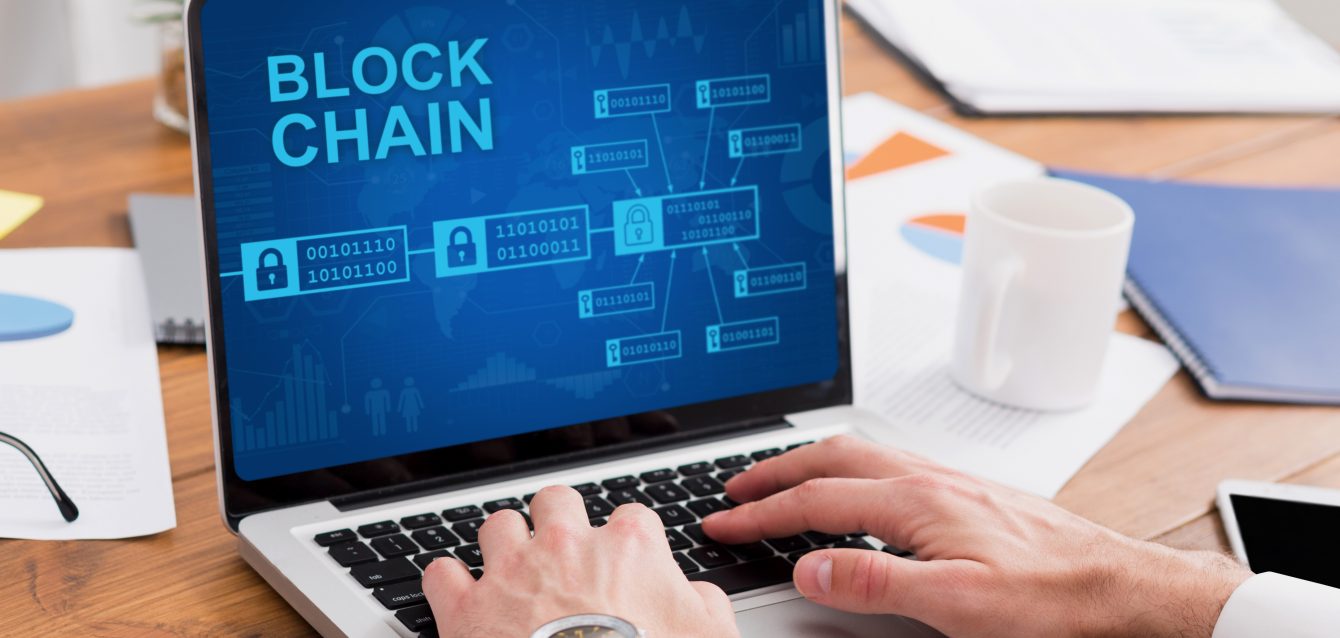
A blockchain is a chain of blocks, where each block contains a batch of validated transactions. Once a block is added to the chain, it cannot be altered or deleted. This is enforced through cryptographic hashing, where each new block contains a unique digital fingerprint of the previous block, linking them in an unbreakable sequence.
In a supply chain context, the “transactions” are the critical events in a product’s lifecycle: a raw material batch being received, a quality check being passed, a product being shipped, or a change in ownership. When these events are recorded on a DLT, they become a permanent, verifiable history accessible to all authorized participants—manufacturers, logistics providers, regulators, and even consumers. This shared, synchronized view of data eliminates the need for costly reconciliation and dramatically reduces the potential for disputes.
Immutable Record-Keeping and Data Integrity
The immutability of the blockchain is its most powerful feature for supply chain transparency. Because the data cannot be retroactively changed, every record—from the temperature of a refrigerated container to the time a package was scanned—is guaranteed to be accurate and tamper-proof. This level of data integrity is impossible to achieve with traditional centralized databases, which are vulnerable to internal manipulation and external cyberattacks.
For business leaders, this means that the data they rely on for decision-making is fundamentally trustworthy. Audits become simpler, regulatory compliance is streamlined, and the risk of internal fraud is significantly mitigated. The chain of custody is no longer a series of disconnected records but a single, unbroken digital thread.
Smart Contracts for Automation and Trustless Execution
Beyond simple record-keeping, blockchain enables the use of smart contracts. These are self-executing contracts with the terms of the agreement directly written into code. They automatically execute predefined actions when specific, verifiable conditions are met.
In the supply chain, smart contracts can automate numerous processes:
- Automated Payments: A payment can be automatically released to a supplier the moment a shipment is verified as received at a port, eliminating payment delays and improving cash flow.
- Compliance Checks: A shipment can be automatically flagged as non-compliant if a sensor records a temperature breach outside of the agreed-upon range, triggering an immediate alert and preventing the goods from proceeding.
- Inventory Management: Ownership of goods can be automatically transferred upon delivery confirmation, instantly updating inventory ledgers across multiple organizations.
Smart contracts remove the need for intermediaries to enforce agreements, reducing transaction costs and accelerating the entire logistics process. They are the engine that translates supply chain traceability into real-time, automated business logic.
Core Benefits: Transparency, Traceability, and Beyond
The implementation of blockchain technology delivers a cascade of benefits that extend far beyond simple data management, fundamentally improving operational resilience and market positioning.
End-to-End Traceability: From Source to Consumer
The primary and most immediate benefit is the establishment of true end-to-end traceability. By assigning a unique digital identity (often a token or a cryptographic hash) to a product, batch, or container, and linking that identity to every event on the blockchain, companies can track an item’s entire lifecycle.
- Inbound Logistics: Trace the origin of raw materials, verifying ethical sourcing and quality certifications.
- Manufacturing: Record every step of the production process, including machine calibration and quality assurance sign-offs.
- Outbound Logistics: Monitor the chain of custody, including location, temperature, and handling conditions, in real-time.
- Retail/Consumer: Provide consumers with a QR code that allows them to instantly verify the product’s authenticity and history.
This granular level of tracking is invaluable for managing recalls, identifying bottlenecks, and optimizing logistics routes.
Enhanced Transparency for All Stakeholders
Blockchain fosters a collaborative ecosystem by providing a shared, yet permissioned, view of the data. Unlike traditional systems where each party guards its own data, DLT allows stakeholders to see the necessary information without compromising proprietary data.
- Regulators can instantly verify compliance without lengthy audits.
- Banks and Financiers can offer faster, more secure trade finance based on verifiable shipment data.
- Suppliers can gain better visibility into demand signals and payment schedules.
This shared transparency builds a stronger, more collaborative, and ultimately more efficient business network.
Operational Efficiency and Cost Reduction
The automation provided by smart contracts and the elimination of manual data entry translate directly into significant cost savings. By reducing the reliance on paper documentation and eliminating the need for intermediaries to verify transactions, businesses can streamline their operations.
A study by the World Economic Forum suggested that DLT could reduce trade transaction costs by up to 15%. This is achieved through:
- Reduced Administrative Overhead: Less time spent on data reconciliation and paperwork.
- Faster Dispute Resolution: Instant access to immutable records resolves disagreements quickly.
- Optimized Inventory: Better visibility leads to more accurate forecasting and reduced stockouts or overstocking.
Building a Resilient and Secure Supply Chain
In an increasingly volatile geopolitical and environmental landscape, supply chain resilience is paramount. Blockchain enhances security and resilience in two key ways:
- Cybersecurity: The decentralized nature of the ledger makes it highly resistant to single-point-of-failure attacks. Data is encrypted and distributed, making it extremely difficult for hackers to compromise the entire system.
- Risk Mitigation: The ability to trace every component allows companies to quickly identify and isolate the source of a disruption, whether it’s a quality issue, a natural disaster, or a geopolitical event, enabling faster recovery and minimizing impact.
Practical Applications and Use Cases
The theoretical benefits of blockchain are being realized across diverse industries, demonstrating clear, practical business value.
Food and Beverage: Proving Provenance and Safety
The food industry is a prime example where supply chain traceability is critical. Consumers are increasingly concerned about food safety, organic certifications, and fair trade practices. Blockchain allows companies to:
- Track Origin: Verify the farm, date of harvest, and processing facility for every food item.
- Monitor Conditions: Record temperature and humidity data throughout the cold chain to prevent spoilage.
- Accelerate Recalls: Reduce the time required to trace contaminated food from weeks to seconds, saving lives and minimizing economic damage.
Pharmaceuticals: Combating Counterfeiting
The pharmaceutical supply chain is plagued by the deadly issue of counterfeit drugs. Blockchain provides a robust solution by creating an immutable record of a drug’s journey from the manufacturer to the pharmacy. Every package can be serialized and tracked, allowing pharmacists and patients to verify its authenticity instantly. This is a vital application of distributed ledger technology that directly impacts public health and safety.
Manufacturing and Logistics: Streamlining Cross-Border Trade
In complex manufacturing, such as aerospace or automotive, tracking thousands of components from various global suppliers is a logistical nightmare. Blockchain simplifies this by:
- Managing Complex Bills of Materials (BOM): Providing a transparent, shared ledger for all component certifications and quality checks.
- Streamlining Customs: Integrating customs documentation into smart contracts, allowing for automated clearance based on verifiable data, significantly reducing delays at borders.
Quantum1st Labs: Architecting the Future of Supply Chain Digitalization
The successful implementation of a blockchain solution for the supply chain requires more than just the technology; it demands a deep understanding of enterprise-level IT infrastructure, cybersecurity, and the integration of advanced analytics. This is the specialized domain of Quantum1st Labs.
Based in Dubai, UAE, and part of the SKP Business Federation, Quantum1st Labs is at the forefront of digital transformation, specializing in AI, blockchain, cybersecurity, and advanced IT solutions. Their approach to supply chain digitalization is holistic, recognizing that blockchain must seamlessly integrate with the existing enterprise ecosystem.
A Holistic Approach: Blockchain, AI, and IT Infrastructure
Quantum1st Labs does not view blockchain in isolation. They understand that the true power of supply chain transparency is unlocked when DLT is combined with other cutting-edge technologies:
- Blockchain for Trust: Providing the immutable, shared ledger for verifiable data.
- AI for Insight: Leveraging AI development capabilities to analyze the vast, trustworthy data generated by the blockchain. This allows for predictive analytics on demand, risk assessment, and proactive identification of supply chain anomalies.
- Cybersecurity for Protection: Integrating advanced cybersecurity protocols to protect the nodes and the data access points, ensuring the integrity of the entire network.
- IT Infrastructure for Scale: Designing and deploying the underlying IT infrastructure necessary to support a high-volume, real-time DLT network, ensuring scalability and performance for global operations.
Secure and Scalable Blockchain Solutions for the UAE and Global Markets
Quantum1st Labs focuses on building enterprise-grade, permissioned blockchain networks. These networks offer the security and immutability of public blockchains while providing the necessary control and privacy required by large corporations and regulatory bodies. Their expertise in the UAE market, a global hub for logistics and trade, positions them uniquely to help businesses in the region and internationally to adopt these transformative technologies.
Their experience in handling massive data sets, such as the 1.5+ TB of legal data for Nour Attorneys Law Firm, demonstrates their capability to manage the sheer volume and complexity of data inherent in global supply chains. This practical experience ensures that their blockchain solutions are not theoretical but robust, scalable, and ready for immediate deployment.
Integrating Blockchain with Existing ERP and Legacy Systems
A major hurdle for blockchain adoption is integration with existing Enterprise Resource Planning (ERP) and legacy systems. Quantum1st Labs specializes in bridging this gap, ensuring that the DLT layer can communicate seamlessly with systems like SAP, Oracle, and custom logistics software. This minimizes disruption and maximizes the return on investment, allowing businesses to leverage their existing technology investments while gaining the benefits of blockchain supply chain innovation.
Conclusion: The Next Era of Trust and Efficiency
The journey to a fully transparent and traceable supply chain is no longer a futuristic concept; it is a present-day necessity. Blockchain for Supply Chain provides the foundational technology to rebuild trust, eliminate fraud, and unlock unprecedented levels of operational efficiency. For business leaders, the choice is clear: embrace this digital transformation or risk being left behind in a market that increasingly values verifiable authenticity and ethical conduct.
The convergence of distributed ledger technology, artificial intelligence, and robust IT infrastructure represents the most significant opportunity for supply chain optimization in decades. By partnering with experts like Quantum1st Labs , companies can navigate the complexities of implementation and deploy secure, scalable solutions that deliver immediate and lasting business value.
Are you ready to transform your supply chain from a black box of risk into a transparent, resilient, and highly efficient engine of growth?
Contact Quantum1st Labs today to schedule a consultation and discover how their integrated blockchain and AI solutions can secure your future in global commerce.
Key Takeaways
- The Problem: Traditional supply chains suffer from opacity, fraud, and high administrative costs due to fragmented, centralized data.
- The Solution: Blockchain (DLT) provides an immutable, shared ledger for verifiable, end-to-end supply chain traceability and transparency.
- Core Mechanisms: Cryptographic hashing ensures data integrity; smart contracts automate transactions and compliance checks.
- Business Value: Reduced fraud, enhanced regulatory compliance, significant operational cost savings, and increased consumer trust.
- Quantum1st Labs Advantage: A holistic approach combining blockchain supply chain expertise with AI, cybersecurity, and scalable IT infrastructure, ensuring seamless integration and maximum business impact.
Primary SEO Keywords
blockchain supply chain, supply chain transparency, supply chain traceability, distributed ledger technology, smart contracts, Quantum1st Labs blockchain, supply chain digitalization, enterprise blockchain, UAE IT solutions, supply chain resilience