
The digital economy has fundamentally reshaped the landscape of business, creating unprecedented opportunities alongside complex, evolving risks. For business leaders, the question is no longer if a cyber incident will occur, but when and how to minimize its impact. In this environment, a Cybersecurity Risk Assessment (CRA) is not merely a technical exercise; it is a foundational strategic imperative that informs governance, investment, and operational resilience. It is the critical process of identifying, analyzing, and evaluating the risks to an organization’s confidentiality, integrity, and availability of information assets.
A comprehensive CRA provides a clear, data-driven picture of an organization’s security posture, allowing leadership to make informed decisions about risk tolerance and resource allocation. It translates complex technical vulnerabilities into quantifiable business risks, ensuring that cybersecurity investments are aligned with organizational objectives and regulatory requirements. For a company like Quantum1st Labs, which specializes in digital transformation, AI development, and robust IT infrastructure, the assessment process is the bedrock upon which secure, innovative solutions are built. This guide outlines the structured, authoritative steps required to conduct a successful cybersecurity risk assessment, drawing on globally recognized frameworks like the NIST Cybersecurity Framework (CSF) and ISO/IEC 27001.
The Strategic Imperative of Cybersecurity Risk Assessment
In an era defined by rapid technological adoption—from advanced AI to distributed ledger technologies—the potential attack surface expands daily. A CRA serves as a proactive defense mechanism, ensuring business continuity and protecting shareholder value.
1. Risk as a Business Function
Cybersecurity risk must be managed at the executive and board level, not solely within the IT department. A breach can lead to devastating financial losses, including regulatory fines, legal fees, and the cost of remediation. More critically, it can erode customer trust and cause irreparable damage to brand reputation. By quantifying risk, the CRA empowers business leaders to understand the potential return on investment (ROI) for security controls, moving cybersecurity from a cost center to a strategic enabler.
2. Regulatory Compliance and Governance
Global and regional regulations—such as the European Union’s General Data Protection Regulation (GDPR), the UAE’s National Electronic Security Authority (NESA) framework, and industry-specific mandates like HIPAA or PCI DSS—impose strict requirements for protecting sensitive data. A formal CRA provides the documented evidence required to demonstrate due diligence and compliance. It identifies gaps between the organization’s current security state and mandatory regulatory controls, making it an essential governance tool.
Phase 1: Preparation, Scoping, and Methodology
The success of any risk assessment hinges on meticulous planning and clear boundaries. This initial phase establishes the “who, what, and how” of the entire process.
3. Defining the Assessment’s Boundaries and Objectives
The scope must be clearly defined to ensure the assessment is manageable and relevant. This involves specifying:
- In-Scope Assets: Which systems, networks, applications, and data sets will be examined? For a large organization, the scope might be limited to a specific business unit, a critical application, or a new IT infrastructure deployment.
- Out-of-Scope Assets: Clearly state what is *not* being assessed.
- Objectives: What is the assessment intended to achieve? (e.g., achieve ISO 27001 certification readiness, identify top 10 risks, or evaluate a new cloud environment).
- Timeframe and Resources: Setting realistic expectations for the duration and the personnel required.
4. Establishing the Risk Assessment Team and Methodology
A multidisciplinary team is crucial, including representatives from IT, legal, finance, and relevant business units. The team must select a standardized methodology to ensure consistency and repeatability.
- NIST Cybersecurity Framework (CSF): Often used for its flexible, risk-based approach, the CSF organizes security activities into five core functions: Identify, Protect, Detect, Respond, and Recover. The “Identify” function is where the risk assessment process is primarily situated.
- ISO/IEC 27001: This international standard for Information Security Management Systems (ISMS) mandates a formal risk assessment process as a core requirement (Clause 6.1.2). It provides a structured, auditable framework for managing information security risks.
Quantum1st Labs leverages its deep expertise in both IT infrastructure and governance to tailor these methodologies. By understanding the specific regulatory environment of the UAE and the strategic goals of the client, Quantum1st ensures the chosen methodology delivers maximum business value and compliance assurance.
Phase 2: Asset Identification and Valuation
Information assets are the crown jewels of any organization. This phase focuses on cataloging these assets and assigning them a business value, which directly informs the prioritization of risks.
5. Cataloging Critical Information Assets
An exhaustive inventory of all assets within the defined scope is mandatory. This includes:
- Hardware: Servers, workstations, mobile devices, network equipment.
- Software: Operating systems, applications, databases, and custom code.
- Data: The most critical asset, categorized by sensitivity (e.g., customer PII, financial records, intellectual property).
- People and Processes: Key personnel, standard operating procedures, and business processes that rely on the technology.
Quantum1st Labs’ experience in managing complex, high-volume data environments, such as the 1.5+ TB legal data project for Nour Attorneys Law Firm, highlights the necessity of robust asset management. Identifying and classifying data at this scale requires advanced tools and methodologies to ensure no critical asset is overlooked.
6. Determining Business Impact and Asset Value
Not all assets are created equal. The value of an asset is determined by the potential impact to the business if its confidentiality, integrity, or availability (CIA triad) is compromised.
- Confidentiality: Unauthorized disclosure of information (e.g., trade secrets leaked).
- Integrity: Unauthorized modification or destruction of information (e.g., corrupted financial records).
- Availability: Interruption of access to information or systems (e.g., website downtime due to a DDoS attack).
Assets are typically ranked using a qualitative scale (High, Medium, Low) or a quantitative financial metric. This valuation is crucial because it dictates the level of resources that should be dedicated to protecting the asset.
Phase 3: Threat and Vulnerability Analysis
With assets cataloged and valued, the next step is to identify the potential dangers (threats) and the weaknesses (vulnerabilities) that could allow those dangers to materialize.
7. Identifying Potential Threat Sources
Threats are the potential causes of an unwanted incident. They can be categorized as:
- External Malicious: Nation-state actors, organized cybercrime, hacktivists.
- Internal Malicious: Disgruntled employees, corporate espionage.
- External Accidental: Natural disasters (fire, flood), utility failures.
- Internal Accidental: Human error, system misconfiguration, hardware failure.
Advanced threat modeling, a core capability of Quantum1st Labs’ cybersecurity services, goes beyond generic lists. It involves analyzing the specific threat actors most likely to target the organization based on its industry, geographic location (such as the high-stakes environment of Dubai, UAE), and the value of its assets.
8. Assessing System Vulnerabilities
Vulnerabilities are the flaws or weaknesses in the system design, implementation, or operation that a threat can exploit. This assessment involves:
- Technical Vulnerability Scanning: Using automated tools to scan networks, applications, and operating systems for known flaws (e.g., unpatched software, weak encryption).
- Configuration Review: Checking system settings against security benchmarks (e.g., CIS benchmarks).
- Penetration Testing: Simulating a real-world attack to find exploitable weaknesses.
- Process and Policy Review: Examining security policies, incident response plans, and employee training for gaps.
Quantum1st Labs’ specialization in AI and IT infrastructure allows for the deployment of sophisticated, AI-driven vulnerability analysis tools that can detect complex, zero-day vulnerabilities often missed by conventional scanners, providing a deeper layer of defense.
Phase 4: Risk Analysis and Evaluation
This is the core analytical phase where the identified threats, vulnerabilities, and asset values are combined to calculate the actual risk level.
9. Calculating Likelihood and Impact
Risk is a function of the likelihood of a threat exploiting a vulnerability and the resulting impact on the business.
- Likelihood: The probability of the risk event occurring (e.g., Very High, High, Medium, Low, Very Low). This is often based on historical data, threat intelligence, and the effectiveness of existing controls.
- Impact: The severity of the business consequence if the risk materializes (e.g., Catastrophic, Major, Moderate, Minor, Negligible). This is derived directly from the asset valuation performed in Phase 2.
10. Prioritizing Risks with the Risk Matrix
The results are typically plotted on a Risk Matrix (a 5×5 or 3×3 grid) to visually represent and prioritize the risks. Risks falling into the “High” or “Critical” categories (high likelihood and high impact) demand immediate attention and resource allocation. This prioritization ensures that limited security budgets are focused on the most significant threats to the organization’s mission.
| Likelihood / Impact | Negligible (1) | Minor (2) | Moderate (3) | Major (4) | Catastrophic (5) |
|---|---|---|---|---|---|
| Very High (5) | 5 | 10 | 15 | 20 | 25 (Critical) |
| High (4) | 4 | 8 | 12 | 16 (High) | 20 (Critical) |
| Medium (3) | 3 | 6 | 9 | 12 | 15 |
| Low (2) | 2 | 4 | 6 | 8 | 10 |
| Very Low (1) | 1 | 2 | 3 | 4 | 5 |
The matrix provides a standardized, objective method for communicating risk to non-technical stakeholders, facilitating executive buy-in for mitigation strategies.
Phase 5: Risk Treatment and Continuous Monitoring
The final phase translates the analytical findings into actionable security improvements and establishes a framework for ongoing risk management.
11. Developing a Risk Treatment Plan
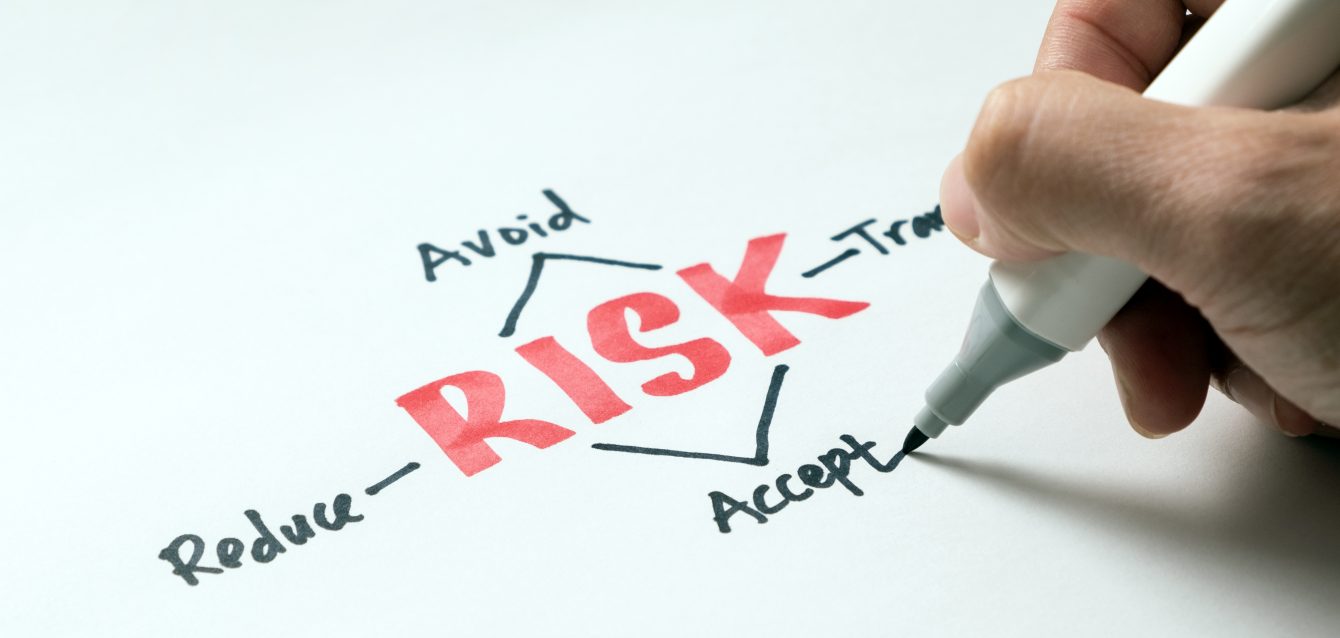
For every identified risk, a treatment strategy must be selected. The four primary strategies are:
- Mitigate: Implementing controls to reduce the likelihood or impact of the risk (the most common strategy).
- Avoid: Eliminating the risk by stopping the activity that causes it (e.g., decommissioning an outdated system).
- Transfer: Shifting the financial impact of the risk to a third party (e.g., purchasing cyber insurance).
- Accept: Acknowledging the risk and taking no action, typically because the cost of mitigation outweighs the potential impact. This decision must be formally documented and approved by management.
The plan must detail the specific controls, the responsible parties, the budget, and the timeline for implementation.
12. Implementing Security Controls and Quantum1st’s Approach
Security controls are the specific measures put in place to mitigate risk. These controls are often mapped directly to frameworks like ISO 27001 Annex A or the NIST CSF’s “Protect” function.
Quantum1st Labs’ core capabilities are directly applicable to implementing advanced security controls:
- AI-Driven Security: Deploying AI for real-time threat detection, anomaly identification, and automated response, moving beyond signature-based security.
- Blockchain Solutions: Utilizing distributed ledger technology to ensure the integrity of critical data and logs, creating an immutable audit trail that is resistant to tampering. This is particularly valuable for financial and legal records, where data integrity is paramount.
- Robust IT Infrastructure: Designing and implementing secure, resilient IT infrastructure that minimizes single points of failure and incorporates zero-trust principles.
13. The Role of Continuous Monitoring and Review
A CRA is not a one-time event; it is a continuous cycle. The threat landscape, organizational assets, and business objectives are constantly changing.
- Monitoring: Controls must be continuously monitored for effectiveness. This includes regular vulnerability scans, log analysis, and performance metrics.
- Review: The entire risk assessment must be formally reviewed at least annually, or whenever a significant change occurs (e.g., a major system upgrade, a merger or acquisition, or a new regulatory mandate).
This continuous feedback loop ensures that the organization’s security posture remains relevant and effective against emerging threats.
Conclusion: Partnering for Cyber Resilience
Conducting a comprehensive cybersecurity risk assessment is the single most effective action a business leader can take to achieve cyber resilience. It transforms the abstract fear of a breach into a concrete, manageable set of priorities. By systematically identifying assets, analyzing threats and vulnerabilities, quantifying risk, and implementing targeted controls, organizations can protect their most valuable assets and maintain stakeholder trust.
The complexity of modern threats, coupled with the rapid pace of digital transformation, necessitates a partnership approach. Quantum1st Labs, with its foundation in AI, blockchain, cybersecurity, and robust IT infrastructure, offers the strategic guidance and technical expertise required to navigate this complex process. From defining the initial scope to deploying AI-powered threat detection and leveraging blockchain for data integrity, Quantum1st Labs is equipped to help organizations in the UAE and globally not just manage risk, but turn cyber resilience into a competitive advantage.
Take the next step toward comprehensive cyber resilience.