The Imperative of Modern IT Infrastructure
In the contemporary business landscape, the efficiency and resilience of an organization’s IT infrastructure are not merely operational concerns—they are fundamental drivers of competitive advantage and digital transformation. For decades, businesses relied on a one-to-one relationship between physical servers and specific applications. This model, while straightforward, led to significant inefficiencies: underutilized hardware, spiraling operational costs, and a rigid infrastructure incapable of responding quickly to market demands. The result was a complex, energy-intensive data center that acted as a bottleneck to innovation.
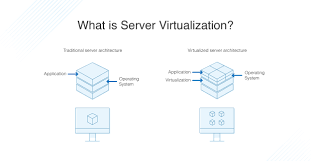
The solution to this pervasive challenge is server virtualization. This technology has fundamentally reshaped how computing resources are managed, deployed, and scaled. It is the foundational technology that underpins modern cloud computing and is essential for any enterprise serious about achieving true agility and cost optimization. By abstracting the operating system and applications from the underlying physical hardware, virtualization allows a single physical server to host multiple independent, isolated virtual machines (VMs).
This article will provide a comprehensive overview of server virtualization, detailing its core mechanisms, its profound business value proposition, and its strategic role in enabling successful digital transformation. For business leaders navigating the complexities of modern IT, understanding this technology is paramount. It is the key to unlocking a more efficient, resilient, and future-proof infrastructure, a core area of expertise for firms like Quantum1st Labs, which specializes in advanced IT infrastructure and digital transformation solutions across the UAE and beyond.
Deconstructing Server Virtualization: The Core Mechanism
Server virtualization is the process of partitioning a single physical server into multiple isolated virtual servers. Each virtual server, or Virtual Machine (VM), operates as an independent computer, complete with its own operating system, applications, and resources, all while sharing the resources of the underlying physical machine.
The Core Mechanism: Hypervisors and Virtual Machines (VMs)
The technology that makes this abstraction possible is the hypervisor. The hypervisor is a layer of software, firmware, or hardware that creates and runs the virtual machines. It is the critical intermediary that manages the physical hardware resources—CPU, memory, storage, and network—and allocates them dynamically to the various VMs.
There are two primary types of hypervisors:
- Type 1 (Bare-Metal) Hypervisors: These run directly on the host machine’s hardware, controlling the hardware and managing the guest operating systems. They are the standard for enterprise data centers due to their high performance, scalability, and security. Examples include VMware ESXi and Microsoft Hyper-V.
- Type 2 (Hosted) Hypervisors: These run as an application on a conventional operating system (OS). They are typically used for desktop virtualization or testing environments. Examples include VMware Workstation and Oracle VirtualBox.
The Virtual Machine (VM) is the complete, isolated environment created by the hypervisor. From the perspective of the OS and applications running inside it, a VM is indistinguishable from a physical machine. This isolation is crucial for security and stability, as a failure in one VM will not affect the operation of others on the same physical host.
The Evolution of Virtualization
While server virtualization is the most common form, the concept has expanded to encompass the entire IT stack, further driving efficiency and agility:
| Type of Virtualization | Description | Primary Benefit |
|---|---|---|
| Server Virtualization | Divides a physical server into multiple virtual machines (VMs), each running its own operating system. | Maximizes hardware utilization and enables efficient server consolidation. |
| Network Virtualization | Abstracts and combines physical networking components into a unified, software-defined virtual network. | Simplifies network management and enables rapid provisioning of network resources. |
| Storage Virtualization | Aggregates physical storage from multiple devices into a single virtual storage pool. | Improves storage utilization and streamlines data management. |
| Desktop Virtualization (VDI) | Separates the desktop environment from the physical endpoint, allowing secure access from any location. | Enhances security and enables centralized management of user desktops. |
The Business Value Proposition: Why It Matters
The adoption of server virtualization is no longer a technical choice but a strategic business imperative. The benefits extend far beyond the data center, directly impacting the bottom line, operational agility, and long-term resilience.
Maximizing Resource Utilization and Efficiency
The most immediate and compelling benefit of virtualization is the dramatic increase in resource utilization. Before virtualization, physical servers often ran at 5% to 15% of their capacity, leading to massive waste. Virtualization allows for server consolidation, where dozens of virtual machines can run on a single physical server, pushing utilization rates to 80% or higher. This consolidation translates directly into a smaller physical footprint, fewer hardware purchases, and a simplified inventory.
Significant Cost Reduction
The reduction in physical hardware has a cascading effect on operational expenses, leading to significant cost reduction:
- Capital Expenditure (CapEx): Fewer physical servers mean lower initial investment in hardware.
- Operational Expenditure (OpEx): A smaller server footprint drastically reduces power consumption and cooling requirements, which are major costs in data centers.
- Real Estate: Less equipment requires less physical space, potentially reducing data center or server room real estate costs.
- Management Overhead: Fewer physical machines to manage, patch, and maintain frees up IT staff to focus on strategic projects rather than routine maintenance.
Enhanced Agility and Faster Provisioning
In the fast-paced digital economy, the ability to deploy new applications and services rapidly is crucial. Virtualization dramatically shortens the provisioning cycle. Instead of waiting weeks for new hardware to be purchased, delivered, racked, and configured, a new VM can be spun up in minutes from a template. This agility is vital for development and testing environments, allowing businesses to accelerate their time-to-market for new products and services.
Strategic Advantages for Enterprise Resilience
Beyond cost and efficiency, virtualization provides strategic advantages that are critical for maintaining business continuity and security in an increasingly volatile digital environment.
Improved Disaster Recovery and Business Continuity
Virtual machines are essentially self-contained files that can be easily backed up, replicated, and moved. This portability is the cornerstone of modern Disaster Recovery (DR) strategies. In the event of a hardware failure or a site-wide disaster, a VM can be quickly restored or migrated to a different physical server or even a cloud environment with minimal downtime. Features like live migration, which allows a running VM to be moved between physical hosts without interruption, ensure near-zero downtime for planned maintenance. This capability significantly enhances business continuity, a critical concern for all enterprises.
Simplified Management and Maintenance
Virtualization platforms offer centralized management consoles that provide a single pane of glass for monitoring, managing, and optimizing the entire virtual environment. This simplifies tasks such as:
- Patching and Updates: Applying patches to the hypervisor layer can secure all hosted VMs simultaneously.
- Load Balancing: Resources can be dynamically allocated to VMs based on demand, ensuring optimal performance for critical applications.
- Hardware Upgrades: Upgrading the underlying physical hardware becomes non-disruptive, as VMs can be migrated off the host before the upgrade and then migrated back.
Security and Isolation Benefits
The inherent isolation between VMs provides a strong security boundary. If one VM is compromised, the breach is contained and cannot easily spread to other VMs on the same physical host. Furthermore, virtualization enables the creation of secure, isolated testing environments (sandboxes) where new software or patches can be safely evaluated before deployment to the production environment, minimizing risk. This isolation is a powerful cybersecurity tool. It facilitates micro-segmentation, a security practice where the network is divided into small, isolated zones, making it significantly harder for attackers to move laterally across the network if a breach occurs. Furthermore, the ability to rapidly snapshot and revert VMs provides an invaluable safety net against ransomware and other malicious attacks. By centralizing the management of the underlying hardware, IT teams can also simplify the security patching process, ensuring a more consistent and robust security posture across the entire virtualized environment.
Navigating the Implementation: Challenges and Considerations
While the benefits of server virtualization are compelling, successful implementation requires careful planning and a clear understanding of potential challenges. Business leaders must be aware of these considerations to ensure a smooth and effective transition:
- Licensing Complexity and Cost: Virtualization introduces new licensing models for operating systems and applications, which can be complex and, in some cases, expensive. Proper license management is essential to maintain compliance and control costs.
- Management Overhead and Skillset: While the *number* of physical machines decreases, the *complexity* of the virtual environment increases. IT staff require specialized skills to manage the hypervisor, storage area networks (SANs), and network virtualization components effectively.
- Performance Over-Commitment: The temptation to over-allocate resources (CPU and memory) to too many VMs on a single host can lead to performance degradation, known as “VM sprawl.” Careful monitoring and capacity planning are critical to maintaining optimal performance.
- Vendor Lock-in: Choosing a virtualization platform often involves a significant commitment to a single vendor. Organizations must consider the long-term implications for portability and cost when selecting their core hypervisor technology.
Addressing these challenges proactively, often with the guidance of experienced IT infrastructure partners, is key to realizing the full strategic value of virtualization.
Virtualization as a Foundation for Digital Transformation
Server virtualization is not an end in itself; it is the essential enabler for the most significant trends in modern IT, including Cloud Computing and the adoption of advanced technologies like AI and Big Data.
The Link to Cloud Computing and Hybrid Environments
The concept of virtualization is inseparable from Cloud Computing. Public cloud providers like AWS, Azure, and Google Cloud are built entirely on massive, globally distributed virtualized infrastructures. For enterprises, virtualization provides the bridge to the cloud, allowing them to build seamless hybrid cloud environments. By using the same virtualization technology on-premises and in the public cloud, businesses can achieve workload portability, enabling them to burst capacity to the cloud during peak demand or migrate applications strategically. This flexibility is a hallmark of true Digital Transformation.
Supporting Modern Workloads (AI, Big Data)
Modern, data-intensive workloads—such as those involving Artificial Intelligence (AI) development, Big Data analytics, and complex blockchain solutions—require immense, scalable computing power. Virtualization allows IT teams to rapidly provision high-performance VMs with dedicated resources (like virtual GPUs) to support these demanding applications. This dynamic resource allocation ensures that strategic projects have the computational resources they need without requiring dedicated, expensive physical hardware for every initiative.
Quantum1st Labs’ Expertise in IT Infrastructure and Digital Transformation
For organizations in the UAE and the wider region seeking to leverage the full potential of server virtualization, partnering with a specialist is crucial. Quantum1st Labs, a leading firm in AI, blockchain, cybersecurity, and IT infrastructure, understands that virtualization is the bedrock of a modern enterprise.
Quantum1st Labs’ approach to Digital Transformation is holistic, focusing on creating robust, scalable, and secure IT foundations. Their expertise ensures that virtualization projects are not just technical implementations but strategic initiatives that deliver tangible business value:
- Strategic Planning: Assessing current infrastructure to design a virtualization roadmap that maximizes consolidation and cost savings.
- Hybrid Cloud Integration: Building seamless, secure connections between on-premises virtualized environments and public cloud platforms.
- Performance Optimization: Ensuring that virtualized environments are tuned for high-performance workloads, including those supporting their advanced AI and blockchain solutions, such as the systems developed for the SKP Federation.
By integrating virtualization with their core competencies in cybersecurity and IT infrastructure, Quantum1st Labs helps business leaders move beyond simple cost-cutting to build a truly agile and resilient digital enterprise.
Conclusion: Virtualizing Your Future
Server virtualization has evolved from a niche technology to the undisputed standard for enterprise IT infrastructure. It offers a powerful combination of benefits—unprecedented efficiency through resource utilization, significant and sustained cost reduction, and the agility required to compete in the digital age. More importantly, it provides the essential foundation for strategic initiatives like cloud adoption, enhanced disaster recovery, and the deployment of next-generation technologies.
For business leaders, the question is no longer if to virtualize, but how to implement a strategy that aligns with their long-term Digital Transformation goals. The complexity of modern IT environments, especially those integrating AI, blockchain, and robust cybersecurity protocols, demands expert guidance.
Unlock the full potential of your IT infrastructure.
To explore how a tailored server virtualization strategy can reduce your operational costs, enhance your business continuity, and accelerate your digital transformation journey, contact the experts at Quantum1st Labs today.
Primary Keywords: Server Virtualization, IT Infrastructure, Digital Transformation, Cloud Computing, Cost Reduction, Disaster Recovery, Resource Utilization