
The rise of Artificial Intelligence (AI) is not merely a technological trend; it is a fundamental shift in the operational and strategic landscape of global business. For the modern business leader, understanding AI is no longer the domain of the IT department—it is a core competency required to navigate the future of competition, efficiency, and innovation. In the dynamic, rapidly evolving market of the UAE and beyond, AI represents the single greatest opportunity for digital transformation and achieving a decisive competitive edge.
This comprehensive guide is designed to cut through the technical jargon and provide a clear, authoritative perspective on AI, focusing on its strategic implications, practical applications, and the necessary roadmap for successful adoption. We will explore how AI is redefining core business functions, from legal research to customer support, and examine how leading firms, such as those partnering with Quantum1st Labs, are already leveraging bespoke AI solutions to achieve measurable, high-impact results. The time for passive observation is over; the era of the AI-driven enterprise is here, and strategic leadership is paramount to harnessing its full potential.
The Strategic Imperative: Why AI is Not Optional
In today’s hyper-competitive global economy, the adoption of AI has moved from a value-add luxury to a strategic imperative. Businesses that fail to integrate AI into their core operations risk being outpaced by more agile, data-driven competitors. For the C-suite, the decision to invest in AI is fundamentally a decision about future relevance and growth.
The Cost of Inaction: The Competitive Gap
The most significant risk in the AI era is not the technology itself, but the cost of inaction. Competitors who strategically deploy AI gain an exponential advantage in speed, cost, and personalization. This creates a widening competitive gap that is increasingly difficult to close. For instance, an AI-driven competitor can analyze market trends in minutes, personalize customer outreach in real-time, and optimize supply chains dynamically, while a non-AI-enabled business remains reliant on slower, manual processes. This disparity translates directly into lost market share, reduced profitability, and a decline in customer experience. Strategic leaders must view AI investment not as an expense, but as a critical defense against obsolescence and a powerful engine for sustained growth.
Defining AI: Beyond the Hype
To formulate a robust AI strategy, leaders must first establish a clear understanding of what AI truly is. At its core, Artificial Intelligence refers to systems or machines that mimic human intelligence to perform tasks and can iteratively improve themselves based on the information they collect.
Core Components of Modern AI
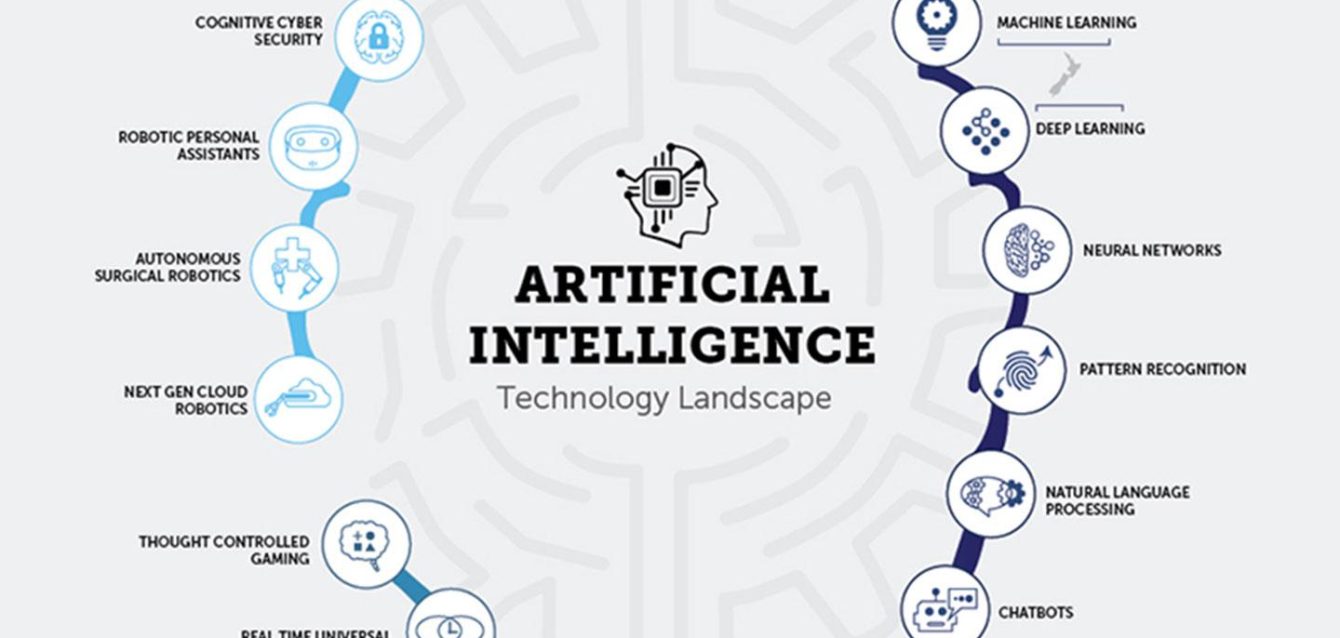
Modern AI is an umbrella term encompassing several distinct technologies, each with unique business applications:
- Machine Learning (ML): The foundation of most commercial AI, ML is the process by which systems learn from data, identify patterns, and make decisions with minimal human intervention. This powers everything from predictive analytics to personalized recommendations. ML models are continuously refined, making them increasingly accurate and valuable over time.
- Deep Learning (DL): A subset of ML that uses artificial neural networks with multiple layers (hence “deep”) to analyze complex data, such as images, sound, and text. DL is critical for advanced tasks like natural language processing (NLP), computer vision, and complex pattern recognition in financial markets or medical diagnostics.
- Generative AI (GenAI): The newest frontier, GenAI creates new content—text, images, code, or data—rather than just analyzing existing information. Its business value lies in accelerating content creation, prototyping, personalized customer interactions, and dramatically reducing the time-to-market for new ideas and products.
The Business Value of AI: Quantifiable Impact
The value proposition of AI is centered on three pillars: efficiency, insight, and innovation. By automating repetitive tasks, AI frees up human capital to focus on strategic, high-value activities. Furthermore, AI’s ability to process and synthesize data at scale provides insights that are simply beyond human capacity, leading to superior decision-making.
| Rank | Business Value Pillar | Example Application |
|---|---|---|
| 1 | Operational Efficiency | AI-powered customer service chatbots handling routine inquiries or automated invoice processing. |
| 2 | Strategic Insight | Predictive analytics forecasting market demand, legal case outcomes, or equipment failure rates. |
| 3 | Product Innovation | Bespoke AI platforms for real-time market intelligence or personalized product design. |
AI in Action: Practical Applications for the Enterprise
AI’s impact is sector-agnostic, transforming every major business function. AI implementation must be targeted, focusing on areas where the return on investment (ROI) is clearest and most immediate.
Transforming Customer Experience with AI
AI-powered tools are revolutionizing how businesses interact with their clients. From personalized marketing to 24/7 support, AI ensures a consistent, high-quality customer journey. Quantum1st Labs has demonstrated this with their work for the SKP Federation, where they deployed a comprehensive Customer Support AI system. This system provides 24/7 AI-Powered Customer Support, handling member inquiries with human-like understanding and achieving an 80% reduction in customer support response times [5]. This level of responsiveness is crucial for maintaining high customer satisfaction in a fast-paced business environment, allowing human agents to focus on complex, high-value interactions.
Enhancing Strategic Decision-Making
For executives, the greatest challenge is often not a lack of data, but an overwhelming volume of it. AI acts as a powerful filter and analysis engine, turning raw data into actionable business intelligence.
The SKP Federation Business AI platform, developed by Quantum1st Labs, is a prime example. This bespoke solution aggregates and analyzes vast amounts of data from multiple sources, including sensitive UAE governmental APIs and market intelligence feeds [4]. The result is Predictive Business Analytics and Real-Time Market Intelligence, giving SKP Federation members a competitive advantage through superior market understanding and data-driven strategic decision support. This capability moves decision-making from reactive to proactive, allowing leaders to anticipate market shifts rather than merely responding to them.
Revolutionizing Back-Office Operations
AI is driving significant efficiency gains in back-office functions like finance, HR, and legal. These areas, often characterized by high volumes of structured and unstructured data, are ripe for AI-driven automation.
In the legal sector, the challenge of processing massive data volumes is acute. Nour Attorneys Law Firm faced this challenge with over 1.5 TB of legal data. Quantum1st Labs developed a bespoke Legal AI solution that combined powerful AI analysis with state-of-the-art Data Tokenization for Enhanced Security [3]. The results were transformative: a 95% improvement in research accuracy and a 70% reduction in case preparation time [3]. This case study highlights the power of specialized AI to not only automate but also to drastically improve the quality and security of critical business processes.
Furthermore, the development of a Customizable ERP System for SKP Federation showcases AI’s role in creating flexible, interconnected infrastructure. This revolutionary system allows each member organization to have a tailored ERP while enabling seamless collaboration and data sharing through inter-ERP communication, a critical feature for large federations or conglomerates [6].
Securing the Digital Frontier with AI-Powered Cybersecurity
As digital transformation accelerates, so does the threat landscape. AI is now the most critical tool in modern cybersecurity and IT infrastructure management. Traditional security systems rely on signature-based detection, which is often too slow to catch zero-day attacks. AI-powered systems, in contrast, use machine learning to analyze network traffic, user behavior, and system logs in real-time, identifying anomalies and predicting threats before they can cause damage. Quantum1st Labs, specializing in IT infrastructure and cybersecurity, leverages AI for:
- Predictive Threat Intelligence: Analyzing global threat data to anticipate attack vectors and proactively patch vulnerabilities.
- Behavioral Anomaly Detection: Establishing a baseline of normal user and system behavior, allowing the AI to instantly flag deviations that indicate a breach or insider threat.
- Automated Incident Response: Using AI to automatically isolate compromised systems, quarantine malware, and initiate recovery protocols, dramatically reducing the time between detection and containment.
Building Your AI Implementation Roadmap
A successful AI implementation roadmap requires more than just purchasing software; it demands a holistic, top-down strategic approach. Business leaders must champion the initiative, ensuring alignment across technology, governance, and talent.
Phase 1: Strategy and Vision
The journey begins with a clear vision that aligns AI initiatives with overarching business goals.
- Identify High-Impact Use Cases: Start small with projects that offer clear, measurable ROI, such as automating a specific customer service function or optimizing a supply chain bottleneck. Focus on areas where data is abundant and the business problem is well-defined.
- Assess Data Readiness: AI is only as good as the data it consumes. Leaders must invest in data governance, quality, and infrastructure to ensure data is clean, accessible, and ethically sourced. This often involves a comprehensive data audit and the establishment of a centralized data lake or warehouse.
- Establish Key Performance Indicators (KPIs): Define metrics for success *before* deployment. For example, track the reduction in response time (like the 80% reduction achieved for SKP Federation) or the improvement in accuracy (like the 95% improvement for Nour Attorneys). Success must be measured in business terms, not just technical performance.
Phase 2: Governance and Ethics
As AI systems become more autonomous, robust governance and ethical frameworks are non-negotiable, particularly in a forward-thinking region like the UAE.
- Transparency and Explainability: Leaders must demand “explainable AI” (XAI) where the system’s decision-making process can be understood and audited. This is vital for regulatory compliance, especially in high-stakes domains like finance and legal, and for building trust with customers and regulators.
- Bias Mitigation: Actively audit AI models for inherent biases in training data to ensure fair and equitable outcomes for all customers and stakeholders. This is an ongoing process that requires continuous monitoring and retraining of models.
- Data Security and Privacy: Solutions like the Data Tokenization used by Quantum1st Labs for Nour Attorneys demonstrate the necessity of integrating advanced security measures directly into AI architecture to protect sensitive information. Compliance with global data privacy regulations (e.g., GDPR, local UAE laws) must be a foundational element of any AI project.
Phase 3: Talent and Culture: The Human Element of AI
Technology alone is insufficient. The successful integration of AI requires a cultural shift and significant investment in human capital. The most successful AI transformations are those that augment human capabilities, not merely replace them.
- Upskilling and Reskilling: Focus on training existing employees to work *with* AI, turning them into “AI-augmented” professionals. This includes teaching data literacy, prompt engineering, and the critical thinking skills necessary to validate and interpret AI-generated insights. This internal development is often more cost-effective and culturally beneficial than relying solely on external hiring.
- Cross-Functional Teams: AI projects thrive when they involve a mix of data scientists, domain experts (e.g., legal, finance), and business leaders. Breaking down organizational silos ensures that AI solutions address real-world business problems and are seamlessly integrated into existing workflows.
- Leadership Buy-in and Advocacy: The C-suite must actively use and advocate for AI tools, setting the example for the rest of the organization. Visible, enthusiastic support from the top is essential for overcoming resistance to change and fostering a culture of innovation and data-driven decision-making.
Conclusion: Partnering for the Future of AI-Driven Growth
Artificial Intelligence is the engine of the next industrial revolution, offering unprecedented opportunities for growth, efficiency, and competitive differentiation. For business leaders in the UAE and globally, the path to successful digital transformation is paved with a clear AI strategy, robust governance, and targeted implementation.
The success stories of companies like Nour Attorneys Law Firm and the SKP Federation, powered by the bespoke solutions of Quantum1st Labs, illustrate a crucial point: the most impactful AI solutions are not off-the-shelf products, but custom-engineered platforms designed to solve specific, high-value business challenges. Quantum1st Labs, with its expertise in Business AI Solutions, blockchain, cybersecurity, and IT infrastructure, is uniquely positioned in Dubai to help organizations navigate this complex landscape. By focusing on measurable results—such as the 95% research accuracy improvement and 80% reduction in response times—Quantum1st Labs delivers AI that translates directly into business value.
Take the Next Step in Your AI Journey:
Do not let your organization fall behind. The strategic adoption of AI requires expert guidance and proven technological capability. Contact Quantum1st Labs today for a consultation to develop a tailored AI Implementation Roadmap that will transform your data into your most powerful asset and secure your position as a leader in the AI-driven economy.