1. Introduction: The Imperative for Trust in Global Commerce
The global supply chain, a sprawling, interconnected network of manufacturers, logistics providers, distributors, and retailers, is the engine of modern commerce. Yet, its sheer complexity is also its greatest vulnerability. In an era defined by rapid globalization and increasing consumer scrutiny, the traditional supply chain model—characterized by fragmented data, paper-based records, and siloed systems—is failing to meet the demands for accountability, efficiency, and trust. Business leaders are facing an urgent imperative: to move beyond mere efficiency and establish verifiable supply chain transparency and supply chain traceability as foundational pillars of their operations.
The lack of a single, trustworthy source of information across the chain leads to pervasive issues, including fraud, counterfeiting, costly delays, and an inability to swiftly respond to product recalls or ethical sourcing concerns. This opacity not only impacts the bottom line but also severely erodes consumer and stakeholder confidence. The solution requires a fundamental shift in how data is recorded, shared, and verified among disparate parties.
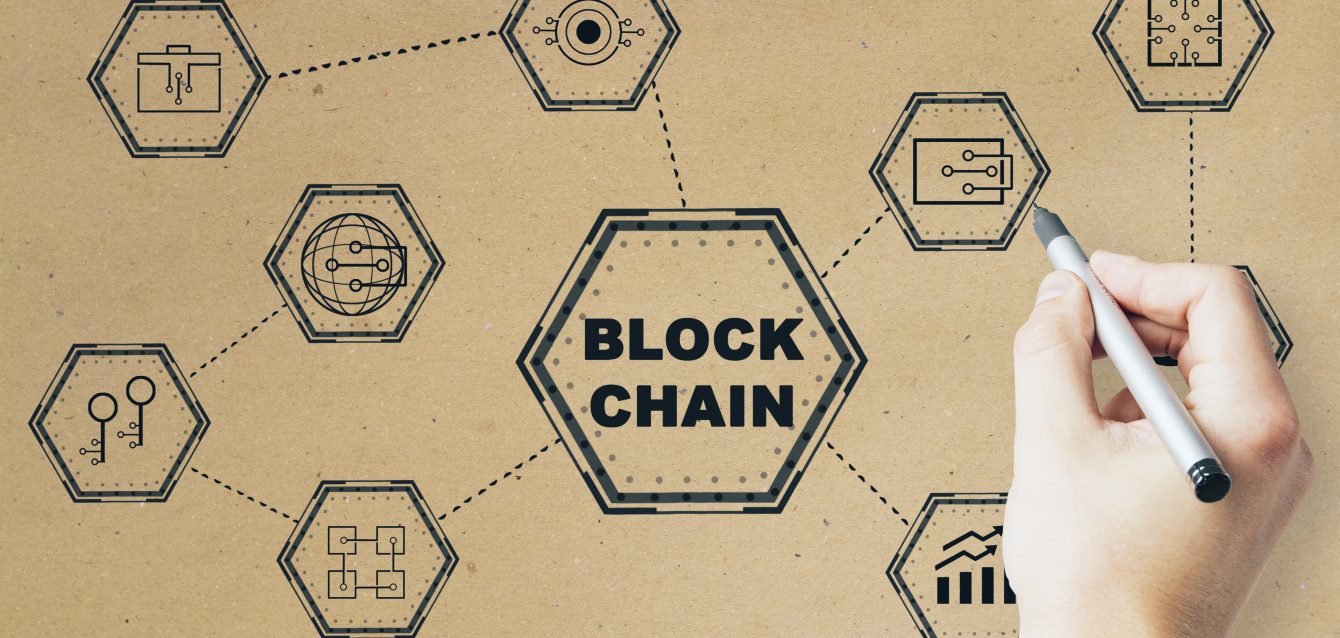
This is where blockchain supply chain technology emerges as a transformative force. Far from being a niche financial tool, the distributed ledger technology (DLT) offers a robust, immutable, and shared record-keeping system that can revolutionize the flow of goods and information. By creating an unchangeable, chronological record of every transaction and movement, blockchain provides the architectural foundation for a new era of trust. For forward-thinking enterprises, particularly those in the dynamic UAE market, adopting enterprise blockchain solutions is no longer a futuristic concept but a strategic necessity for achieving competitive advantage and driving comprehensive digital transformation.
2. The Opacity Crisis in Modern Supply Chains
Before exploring the solutions, it is crucial to understand the depth of the challenges inherent in conventional supply chain management. These issues are systemic, creating a fertile ground for inefficiency and risk that directly impacts corporate reputation and financial health.
2.1. The Challenge of Fragmented Data and Siloed Systems
In a typical supply chain, information is managed by numerous independent entities, each using its own proprietary system. A product’s journey might involve dozens of handoffs, from raw material suppliers to processors, shippers, customs agents, and retailers. The data generated at each point—such as origin, quality certifications, temperature logs, and transfer of ownership—is often stored in isolated databases or, worse, on physical documents.
This fragmentation means there is no single, verifiable source of truth. When discrepancies arise, reconciling the records across multiple systems is time-consuming, expensive, and often impossible. This lack of interoperability and the reliance on manual data entry introduce significant opportunities for error and manipulation, making true supply chain transparency an elusive goal [1].
2.2. The High Cost of Untraceability and Fraud
The inability to track a product’s provenance with certainty creates a massive vulnerability to fraud and counterfeiting. In industries ranging from luxury goods and pharmaceuticals to food and electronics, counterfeit products cost the global economy hundreds of billions of dollars annually, damaging brand integrity and posing serious health and safety risks [2].
Furthermore, when a product recall is necessary, the lack of supply chain traceability forces companies to recall entire batches, often at great expense, because they cannot pinpoint the exact source of the contamination or defect. A system that allows for granular, item-level tracking is essential for minimizing the scope and cost of such crises, turning a potential disaster into a manageable, targeted intervention.
2.3. Erosion of Consumer and Stakeholder Trust
Today’s consumers, investors, and regulators demand more than just a quality product; they demand ethical and sustainable sourcing. They want proof that goods were produced without forced labor, that materials are sustainably harvested, and that the carbon footprint is minimized.
The traditional supply chain, with its inherent opacity, cannot reliably provide this proof. Companies are often forced to rely on third-party audits that provide only a snapshot in time, rather than continuous, verifiable data. This gap between corporate claims and verifiable evidence leads to a significant erosion of trust. For enterprises committed to Environmental, Social, and Governance (ESG) criteria, establishing verifiable supply chain transparency is paramount to maintaining their social license to operate and attracting socially conscious capital.
3. Blockchain: The Architecture of Trust
Blockchain supply chain technology is uniquely suited to address the systemic failures of traditional supply chain models. Its core features—decentralization, immutability, and cryptographic security—provide the framework for a shared, trustworthy, and efficient data ecosystem.
3.1. Immutability and the Single Source of Truth
At its heart, a blockchain is a distributed ledger shared among all participants in the network. Once a transaction or data point—such as a shipment’s departure, a quality control check, or a change of ownership—is recorded on the ledger, it is cryptographically linked to the previous entry, forming a “chain” of blocks. This structure makes the data immutable; it cannot be altered or deleted without the consensus of the network, which is practically impossible.
This immutability establishes a single source of truth that all parties, regardless of their relationship, can trust. It eliminates the need for constant reconciliation and reduces disputes, as the history of the product is permanently recorded and verifiable by anyone with permission. This foundational trust is the key enabler for true supply chain transparency.
3.2. Smart Contracts for Automated Compliance and Execution
Enterprise blockchain solutions often leverage smart contracts, which are self-executing contracts with the terms of the agreement directly written into code. These contracts automatically execute predefined actions when specific conditions are met and verified by the blockchain.
For the supply chain, smart contracts can automate critical processes:
- Automated Payments: A payment to a supplier is automatically released the moment the blockchain records the successful delivery and quality inspection of goods.
- Regulatory Compliance: A shipment is automatically flagged or halted if the smart contract detects that a required certification (e.g., a health or safety standard) has expired or is missing from the ledger.
- Inventory Management: Inventory levels are updated in real-time across all partner systems the moment a transfer of ownership is recorded.
This automation drastically reduces administrative overhead, accelerates transaction speeds, and ensures that contractual and regulatory obligations are met with precision, minimizing human error and intervention [3].
3.3. Real-Time Traceability with IoT Integration
The true power of supply chain traceability is unlocked when blockchain is integrated with Internet of Things (IoT) devices. Sensors, RFID tags, and GPS trackers can continuously monitor physical conditions—such as temperature, humidity, and location—and automatically feed this data directly onto the blockchain.
This integration creates a seamless, real-time digital twin of the physical supply chain. For instance, a shipment of temperature-sensitive pharmaceuticals can have its temperature logs automatically and immutably recorded every hour. If the temperature exceeds a predefined threshold, the smart contract can immediately alert all relevant parties and record the deviation, providing instant, verifiable evidence of a breach in the cold chain. This level of granular, real-time tracking is invaluable for quality assurance, risk mitigation, and providing irrefutable proof of provenance to end-users.
4. Strategic Business Value for Enterprise Leaders
For C-suite executives and business leaders, the decision to invest in blockchain supply chain technology is a strategic one, driven by tangible returns on investment (ROI) and a significant reduction in enterprise risk. The value proposition extends far beyond mere technological adoption; it is about securing a future-proof, resilient, and ethically sound business model.
4.1. Operational Efficiency and Cost Reduction
The implementation of enterprise blockchain solutions leads to a direct and measurable increase in operational efficiency. By eliminating the need for manual data entry, paper-based documentation, and third-party intermediaries, companies can streamline their processes and reduce administrative costs.
A key area of savings is in dispute resolution. Because the blockchain provides an irrefutable, shared record of all events, the time and resources spent resolving contractual disagreements, payment delays, and inventory discrepancies are drastically reduced. Furthermore, the speed of transactions is accelerated, freeing up working capital and improving cash flow across the entire ecosystem [4].
| Strategic Value | Traditional Supply Chain | Blockchain-Enabled Supply Chain |
|---|---|---|
| Data Integrity | Fragmented, prone to error, easily manipulated. | Immutable, cryptographically secured, single source of truth. |
| Transaction Speed | Slow, reliant on manual verification and intermediaries. | Near real-time, automated via smart contracts. |
| Recall Management | Broad, costly, and time-consuming due to poor traceability. | Targeted, rapid, and cost-effective, with item-level tracking. |
| Trust | Low, requiring costly third-party audits and contracts. | High, built into the shared, verifiable data architecture. |
4.2. Enhanced Risk Management and Compliance
In a world of increasing regulatory complexity, supply chain traceability is a powerful tool for risk mitigation. Blockchain provides an audit trail that is both comprehensive and tamper-proof, making compliance with international trade regulations, food safety standards, and ethical sourcing mandates significantly easier and more reliable.
When a crisis occurs, such as a contamination event or a regulatory audit, the ability to instantly trace a product back to its origin, identify all intermediate handlers, and verify all associated certifications is a game-changer. This rapid response capability minimizes financial exposure, limits brand damage, and ensures regulatory adherence, transforming compliance from a reactive burden into a proactive competitive advantage.
4.3. Building Brand Equity through Proven Transparency
The market is increasingly rewarding companies that can demonstrate genuine ethical and sustainable practices. Supply chain transparency powered by blockchain allows companies to move beyond marketing claims and provide verifiable proof of their commitments.
By giving consumers and stakeholders access to a secure, permissioned view of a product’s journey—confirming its organic status, fair-trade sourcing, or low-carbon transport—businesses can build unparalleled brand loyalty. This verifiable transparency acts as a powerful differentiator, attracting premium customers and enhancing brand equity in a competitive global marketplace. This commitment to verifiable data is a crucial component of modern digital transformation.
5. Quantum1st Labs’ Approach to Secure Blockchain Solutions
Implementing a blockchain supply chain solution is a complex undertaking that requires deep expertise in distributed ledger technology, cybersecurity, and seamless integration with existing IT infrastructure. For enterprises in the UAE and the wider MENA region, partnering with a specialist firm that understands both the technology and the unique regional business landscape is essential.
Quantum1st Labs, a leading firm specializing in AI, blockchain solutions, cybersecurity, and advanced IT infrastructure based in Dubai, is uniquely positioned to guide organizations through this digital transformation. Our approach is grounded in the understanding that a successful blockchain implementation must be secure, scalable, and deeply integrated into the enterprise’s core operations.
5.1. Enterprise-Grade Blockchain Architecture
Our world-class engineers and blockchain experts focus on developing permissioned, private, or hybrid blockchain networks that meet the stringent requirements of large enterprises. Unlike public blockchains, these solutions offer the necessary control over access and governance while retaining the core benefits of immutability and decentralization. We design architectures that are scalable to handle the massive transaction volumes of global supply chains, ensuring performance does not become a bottleneck to growth.
5.2. Cybersecurity as a Foundational Layer
Given our deep specialization in cybersecurity, every enterprise blockchain solution we develop is built with security as the highest priority. While blockchain is inherently secure, the surrounding infrastructure—including the IoT devices, APIs, and user access points—remains vulnerable. Quantum1st Labs integrates advanced security protocols, including quantum-resistant cryptography where necessary, to protect the entire ecosystem. This holistic approach ensures that the data recorded on the immutable ledger is trustworthy from the moment of capture.
5.3. Seamless Integration and Digital Transformation
A common pitfall in DLT adoption is the failure to integrate the new system with legacy ERP, CRM, and logistics management systems. Quantum1st Labs’ expertise in IT infrastructure and digital transformation ensures a smooth, non-disruptive transition. We develop custom middleware and APIs that allow the blockchain to communicate seamlessly with existing systems, maximizing the ROI on prior technology investments while unlocking the new capabilities of supply chain transparency and traceability. Our strategic consultants work with business leaders to map the blockchain implementation to specific business outcomes, ensuring the technology serves the strategic goals of the organization.
6. Conclusion: The Future is Transparent
The era of opaque, fragmented supply chains is rapidly drawing to a close. In the competitive landscape of global commerce, supply chain transparency and traceability are no longer optional features but fundamental requirements for resilience, compliance, and consumer trust. The adoption of blockchain supply chain technology represents a critical step in the digital transformation journey, offering a verifiable, immutable, and efficient mechanism for managing the flow of goods and information.
By leveraging enterprise blockchain solutions, business leaders can mitigate the risks of fraud and counterfeiting, drastically reduce operational costs through automation, and build powerful brand equity based on verifiable ethical sourcing. This technology empowers organizations to create a truly trustworthy ecosystem, turning the complexity of the global supply chain into a source of strategic advantage.
The future of commerce is built on trust, and trust is built on verifiable data. Quantum1st Labs is committed to providing the secure, scalable, and integrated blockchain solutions necessary to realize this future.